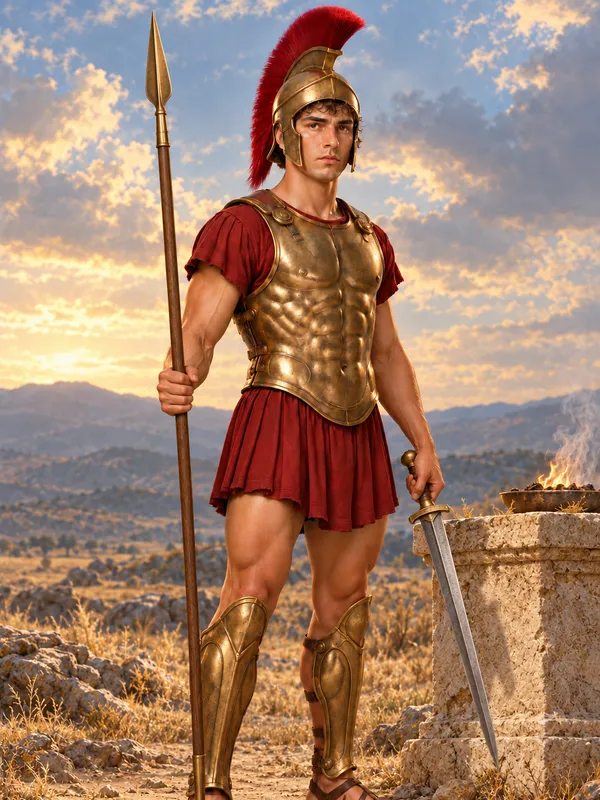
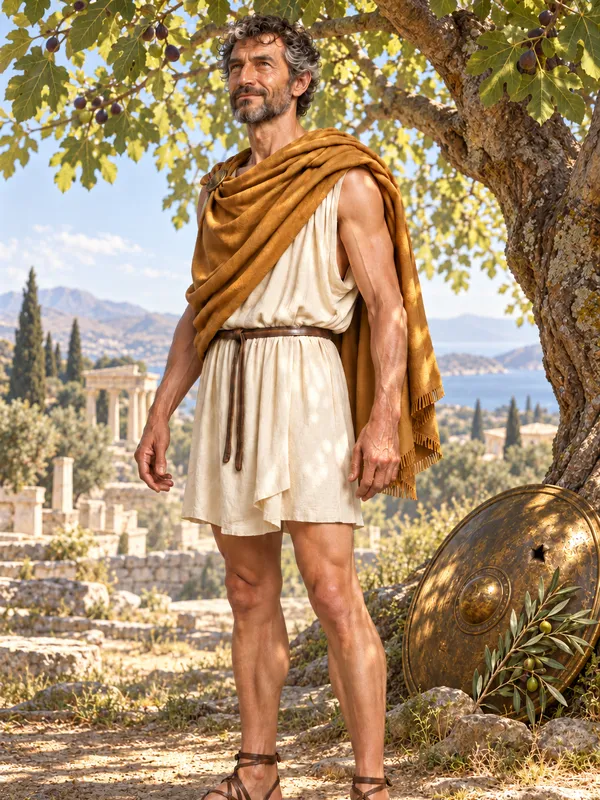
ION (mythical son of Apollo)
Figure of myth · mythical son of Apollo
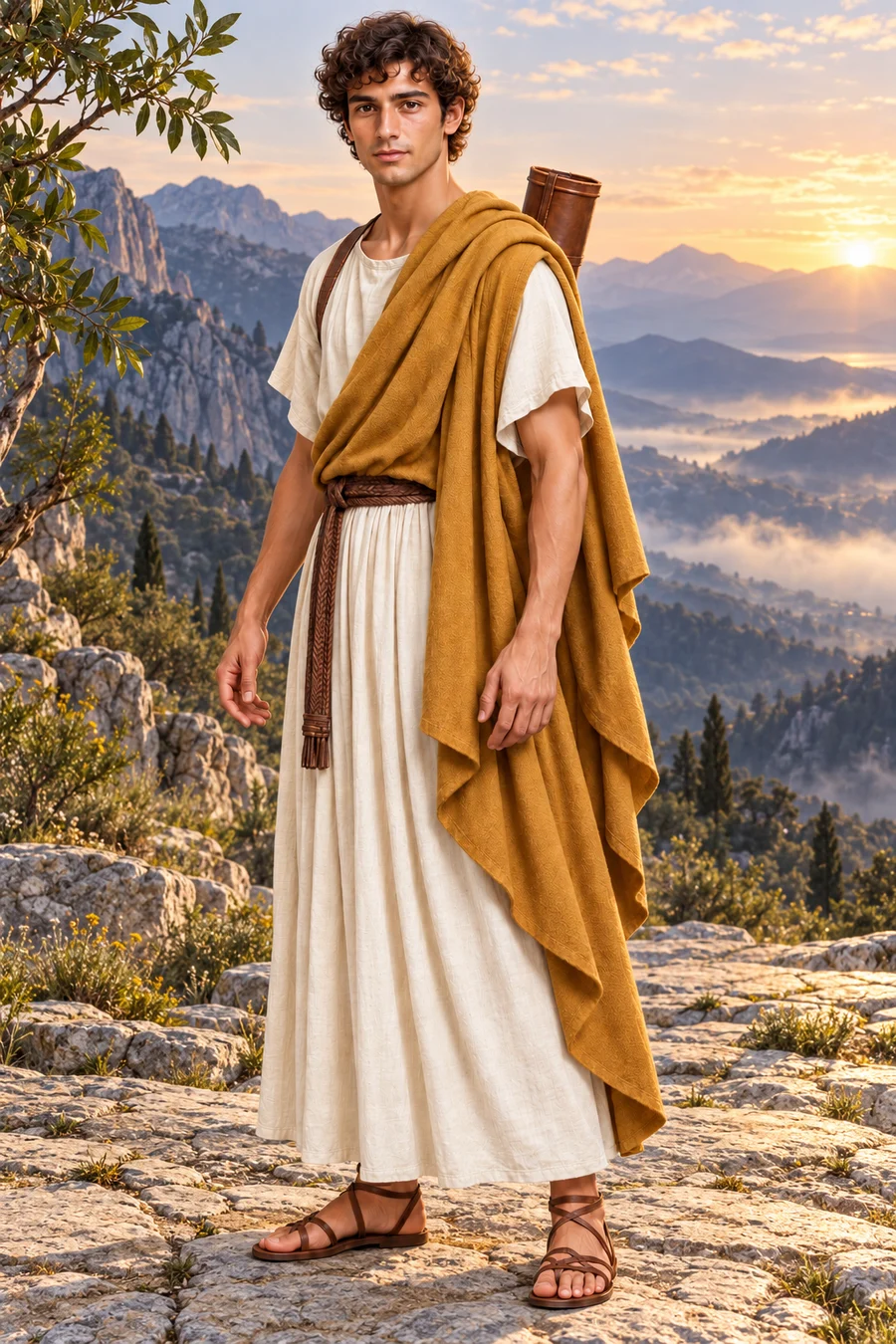
- Parents
- Apollo, Xuthus, Creusa
- Siblings
- Achaeus, Diomede
- Consorts
- Helice
- Children
- Bura, Hoples, Aegicoreus, Ellops
- In the sources
- 83 ancient passages
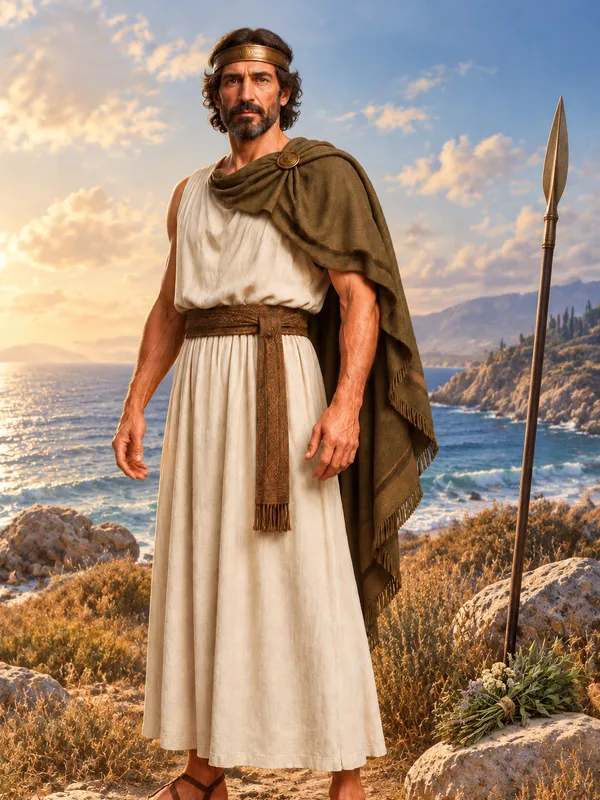
Raised as an orphan without knowledge of his parents, he ministered in the sanctuary, viewing his service to the deity as a glorious task.1,2 Though he spoke courteously and inquisitively about lineage, he harbored a deep hatred for step-dames due to their evil treatment of him, judging noble birth by a person's bearing rather than their claims.3,4
His origins were shrouded in mystery, as a priestess found the infant in Apollo's shrine after the god intervened to prevent her from abandoning the baby.5,6 Unaware of the child's true parents, the priestess raised him, and he later came to regard her as his mother despite her not having given birth to him.7,4 The infant had been exposed by his mother, Creusa, daughter of Erechtheus, who wrapped him in her own weaving and placed him in an ark within the cavern of Cecrops.8,5,9,10 The ark contained golden serpents intended as necklaces, hallowed wreaths, and the swaddling clothes in which he was originally wrapped, all of which had not decayed over time.9,11,4 As a child, he was fed by the altar and the generosity of visitors, playing around the sacred site until he was sent away to be nursed by a Delphian woman.6,7,12
Creusa had attempted to kill him, including by poisoning and attacking him while he was stationed at an altar, because she viewed him as an enemy to her house.13,10 When confronted with the truth, Ion initially refused to believe Creusa was his mother, calling her mad and demanding she leave the altar.13,9
He also founded a city in Aegialus named Helice after his wife, and his descendants became the rulers of the Ionians.14,15
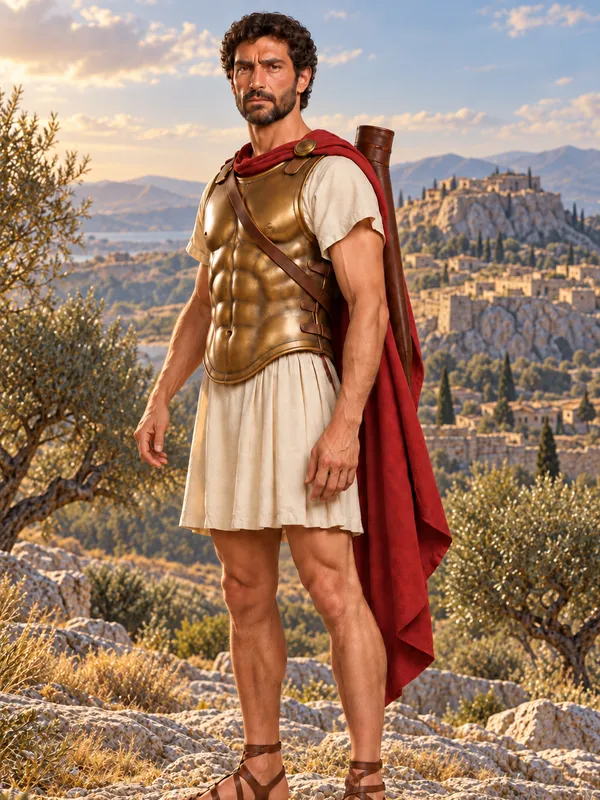
Ion considered the ancestral throne to be his heritage, while Creusa told him that all land won by his father's sword and shield belonged to him alone.16,13 He was the father of Bura, Ellops, and other children, and had a brother named Achaeus, though accounts of his family vary in detail.17,18,19 In a moment of rage, he planned to throw a woman from the peaks of Parnassus, believing she had plotted to kill him using Gorgon venom.20 Ultimately, his legacy was cemented not just by his bloodline, but by his role as the namesake of the Ionian people and their enduring connection to the land of Attica.21,22
The codex facts behind this entry
Ion considers the god Phoebus to be his biological father. Euripides, Ion 128-143 +2 Ion is the son of Loxias and the woman identified as Creusa. Euripides, Ion 1468-1509 +1
In the myths
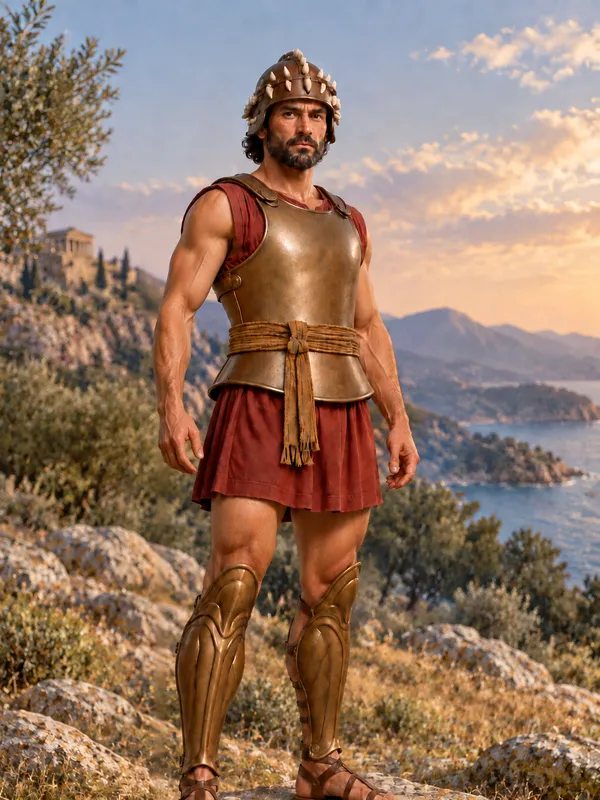
The Athenians selected Ion as commander-in-chief for the war with Eleusis. Herodotus 8.44.2 +3 A priestess found the infant Ion in Apollo's shrine and decided to raise him after Apollo intervened to prevent her from abandoning the baby. Euripides, Ion 1437-1467 +2 As a child, Ion was fed by the altar and the generosity of visitors, and he played around it. Euripides, Ion 308-354 +1 Creusa exposed the infant Ion in an ark within the cavern of Cecrops, wrapping him in her own weaving and binding an olive wreath around his brow. Euripides, Ion 1395-1436 +1 Creusa attempted to kill Ion, including by poisoning him and attacking him while he was stationed at an altar, because she viewed him as an enemy to her house. Euripides, Ion 1282-1319 +1 Ion initially refused to believe Creusa was his mother, called her mad, and demanded she leave the altar. Euripides, Ion 1282-1319 +1 Some Ionian nymphs gave the violet flower to Ion during their meeting in the meadows of Pisa. Athenaeus 15.28 +1
Fate
Xuthus intended to vest sovereignty in Ion if he escaped exposure and eventually persuade his wife to let him rule the realm with his sceptre. Euripides, Ion 650-675 +1