DAPHNIS (mythological Greek character, son of Hermes, inventor of Bucolics)
Figure of myth · mythological Greek character, son of Hermes, inventor of Bucolics
- Parents
- Hermes
- Consorts
- Lyce, Echenais
- Symbols and gear
- calves
- In the sources
- 33 ancient passages
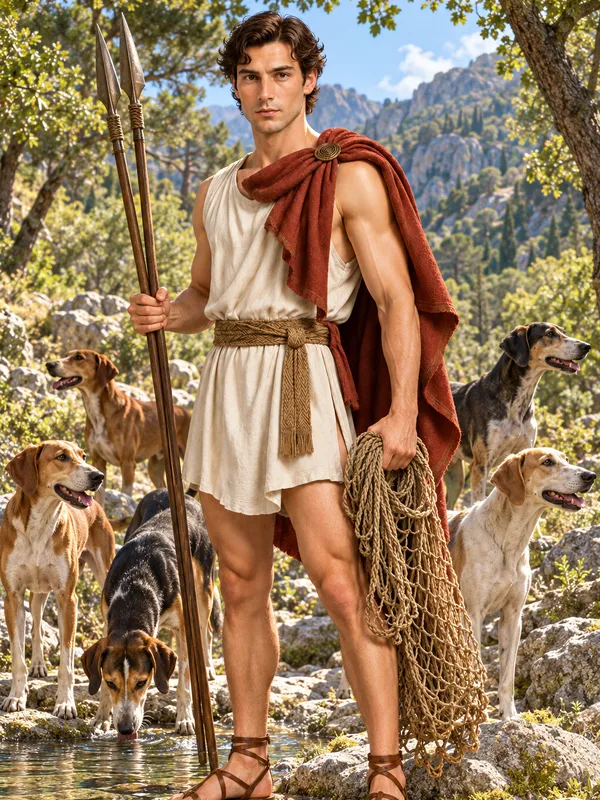
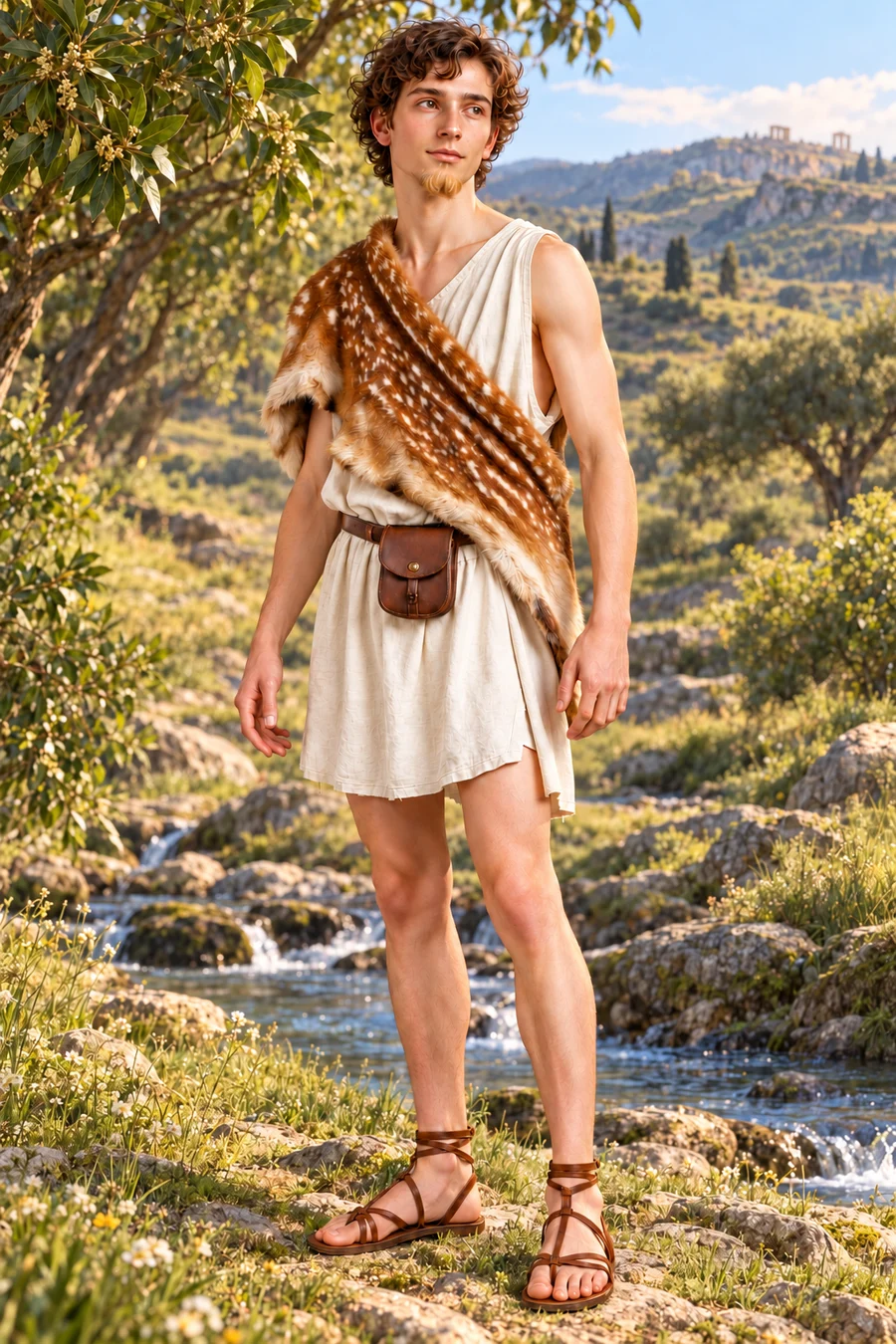
Daphnis, called Bucolus or Neatherd for his attention to his cattle, was a herdsman born in the Heraean Mountains of Sicily.1,2,3 Accounts differ regarding his parentage, with one tradition naming him the son of the god Hermes and a Nymph, while Daphnis himself identifies as the child of Lycidas and Nomaea.4,3 Nymphs raised him in a grove consecrated to them, where his name came from the abundant sweet bay trees that grew in his birthplace.3 In his earliest youth, he was beautiful, possessing white limbs and the first golden bloom of a beard on his chin.5,6,1 Some accounts describe him as a little satyr in dialogue, yet he was foremost among the shepherds and skilled in playing the pipe and singing.7,6,8
He owned numerous herds of cattle, which he carefully tended and drove past caves in the area.9,10,3 Daphnis invented the bucolic or pastoral poem and song, pleasing Artemis with his shepherd's pipe and pastoral singing.3 He possessed an unusual gift for singing and often played a musical prelude on a wax-bound pipe to charm listeners before his song.11,10,3 He owned a nine-stop pipe fitted with white wax and smoothed evenly, along with a fair flute used for playing pastoral music.12,5,11 His musical prowess led him to win a singing contest against other young men, including a wager against Menalcas where he suggested a goatherd with a black hound as judge.12,8
While in his earliest youth, Daphnis married the nymph Nais.6,8 A Nymph who was his lover became enamoured of him and issued a prophecy about his sight.3,13 He was made drunk by a king's daughter and lay with her, though he heeds no more the scorching summer than a lover cares to heed the words of father or mother.3,14 He once loved a maiden who was a stranger to him, wandering on a hill in his longing.15 He gazed with longing at maidens but did not join their dances, enduring his painful love until his destined end.16
Tormented and languishing with bitter love, Daphnis wasted away like snow on high mountains.17,15,16 Various herdspeople gathered to ask what was wrong with him, and Hermes questioned him about the source of his intense romantic longing.16 Priapus criticized him for being a slow and ineffective lover, while Daphnis did not answer the herdsman.16 He was deprived of his sight.3 Jackals, wolves, and a lion cried out in lament for him, as did cattle, bulls, heifers, and young calves at his feet.17
Thyrsis was known for singing a song about the suffering of Daphnis, and shepherds will no longer sing songs about him.18,19 He declared he would never be seen again in dells, groves, or woodlands, and claimed he would cause great sorrow to Love even after reaching Hades.20 He identified himself as the one who herds cattle and waters bulls and calves in the area.20 In life, he slept on a bed of leaves near cool water, using skins from white calves as bedding, and received a straight staff that had grown in an enclosed garden.21,14
The codex facts behind this entry
Daphnis is identified as a herdsman who tended cattle. Theocritus, Idyl 6 ¶1 +2
Appearance
Daphnis is described as having white limbs and being beautiful in his earliest youth. Theocritus, Epigrams ¶1 +1 Daphnis had golden down on his chin, showing the first golden bloom of growth. Theocritus, Idyl 6 ¶1 +1
In the myths
Daphnis played a musical prelude on a wax-bound pipe to charm listeners before singing his song. Theocritus, Epigrams ¶2 +1
Fate
Daphnis was suffering from a state of languishing and wasted away like snow on high mountains. Theocritus, Idyl 1 ¶4 +1