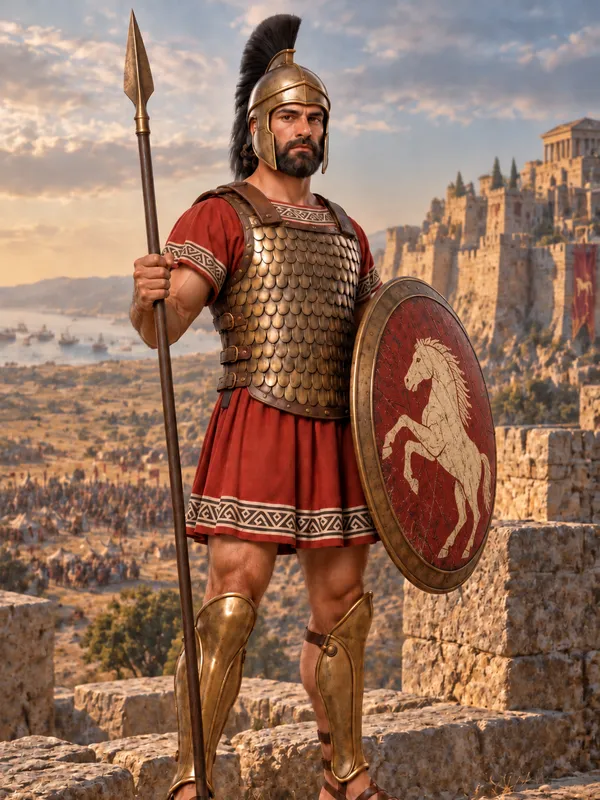
CIMMERIAN (nomadic man of the Caspian steppe)
People and soldiers · ancient Eastern Iranian equestrian nomadic people originating in the Caspian steppe, part of whom subsequently migrated into West Asia
- In the sources
- 28 ancient passages
Cimmerians were a people dwelling in a dark country in the north, characterized by perpetual mist, clouds, and darkness.1,2 They lived in northern and gloomy regions close to the Cimmerian Bosphorus.3,4 Homer was familiar with the Cimmerians as actual people, not just by name.2 The Kimmerians are identified as a group that included a separate tribe known as the Treres.5
The Scythians pursued the Cimmerians during their flight, putting them under severe pressure and posing a significant military threat.6,7 The Cimmerians were forced to leave their homes by the nomad Scythians.8 They were driven out of Europe by the Scythians and fled into Asia.9,7 The Cimmerians consistently retreated along the coastline while being chased by the Scythians.10 They were pursued into the Median land during their coastal flight.10
Once in Asia, the Cimmerians ravaged the entire country stretching from the Bosphorus to Ionia.2 They frequently overran the lands to the right of the Euxine Sea and adjacent regions.5 They burst into Paphlagonia and Phrygia during their incursions.5 The Cimmerians made inroads into the region after the Trojan times.11 They invaded Aeolia and Ionia during or shortly before Homer's time.4 The Ionians held a common hatred against the Cimmerians.4
Their leader Lygdamis led followers into Lydia, passed through Ionia, and took the city of Sardis.5 They captured the city of Sardis, leaving only the acropolis unconquered.8 Callisthenes and the elegiac poet Callinus both state that the Cimmerians were the first to capture the city of Sardes.12 Lygdamis was slain in Cilicia after his incursions.5 Cyaxares and the Medes later drove the Cimmerians out of Asia.13
The Kimmerians lived in underground habitations, while their oracle servants never saw the sun and left only at night.14 Sailors entering the area made sacrifices to infernal deities as instructed by Kimmerian priests.14 None of the Cimmerians were destined to return to Scythia.15 A king exterminated the Kimmerians after the oracle deceived him.14
The codex facts behind this entry
Homer was familiar with the Cimmerians as actual people, not just by name. Strabo 1.1.10 The Kimmerians are identified as a group that included a separate tribe known as the Treres. Strabo 1.3.21 Some claim the Cimmerians were the savage northern Gauls who overran Asia in ancient times. Diodorus 5.32
In the myths
The Cimmerians were driven out of Asia by Cyaxares and the Medes. Herodotus 1.16.2 The Cimmerians entered the region of Asia. Herodotus 1.15.1 They established a colony on the peninsula later occupied by the Greek city of Sinope. Herodotus 4.12.2 They ravaged the entire country stretching from the Bosphorus to Ionia. Strabo 1.1.10 Chroniclers report an incursion by the Cimmerians during or before Homer's life. Strabo 1.2.9 The Cimmerians invaded Aeolia and Ionia during or shortly before Homer's time. Strabo 3.2.12 Callinus states the Cimmerian incursion against Sardes was directed specifically at the Esioneis. Strabo 13.4.8 They frequently overran the lands to the right of the Euxine Sea and adjacent regions. Strabo 1.3.21 They burst into Paphlagonia and Phrygia during their incursions. Strabo 1.3.21 According to report, their presence coincided with the death of Midas by drinking bull's blood. Strabo 1.3.21
Worship
They impaled criminals in honor of the gods after keeping them prisoner for five years. Diodorus 5.32 They used captives as victims for their sacrifices to the gods. Diodorus 5.32
Fate
Lygdamis was slain in Cilicia after his incursions. Strabo 1.3.21 A king exterminated the Kimmerians after the oracle deceived him. Strabo 5.4.5 None of the Cimmerians were destined to return to Scythia. Callimachus, Hymn 3 ¶12