ASTYANAX (infant son of Hector)
Figure of myth · mythical son of Hector
- Parents
- Hector, Andromache
- Children
- Polydorus
- In the sources
- 27 ancient passages
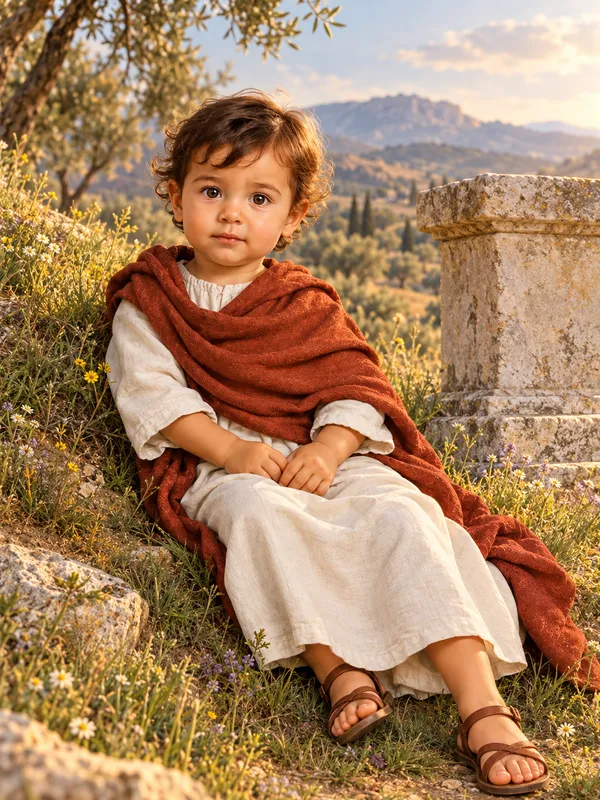
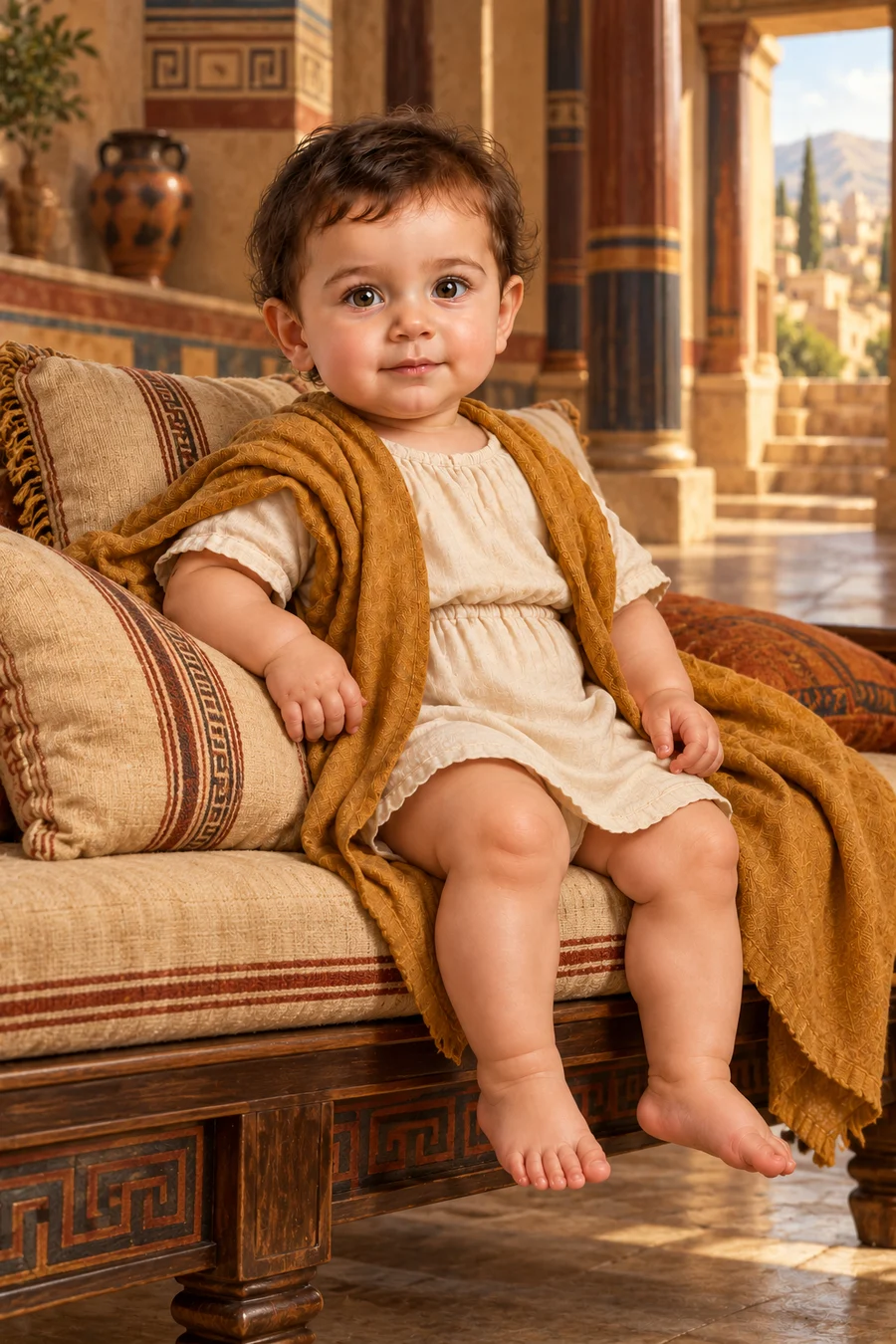
Astyanax was the infant son of Hector and Andromache, a mere babe lovely as a star.1,2,3,4,5 The Trojans named him Astyanax because his father guarded the city alone and was the chief guardian of their gates.2,5 In other accounts, Hector gave him the name Scamandrius.5 Though he was a wordless baby who knew nothing of war, he was described as the fear of Odysseus' armies and the dread of his fleet.6,7 He stood as the sole remaining support of his fallen family.8
In his early days, the child sat upon his father's knees and ate the choicest food.2 He slept in a bed on a soft couch in the arms of his nurse.2 A nurse carried him in her bosom to meet his father.5 Hector smiled at the boy but did not speak to him.5 Andromache frequently showed him his father fighting on the walls.9 She predicted his future life would be filled with labor and sorrow, expecting him to be driven from tables by children of living parents.2 She foresaw that he would become destitute and beg for food among his father's friends.2 Others were expected to seize his lands after his father's death.2
The Danaids are also said to have killed him by throwing him from the city walls.10 The enemy killed the baby because they hated his father Hector.6 His death was required for the Greek ships to depart for home.11 He was told he must die because he was greatly feared despite being a child.12
Before his death, Talthybius took the boy away from his mother and ordered him to climb the high ancestral towers to die.4 In a different account, Andromache hid him in a tomb out of fear, but he emerged to be presented to Odysseus.7 Andromache instructed Astyanax to raise his hands in prayer to Odysseus and to forget his royal birth and his father's rule.7 Astyanax begged his mother to pity him and save him from his fate, clinging to her robes for protection.12 She told him to take her tears, kisses, and hair to his father and to speak her parting words to his spirit.12
His head was broken open by the fall.13,14 His body was carried on Hector's shield.10 Hecuba struck her head and beat her breast in grief for the boy.4 Andromache mourned the death of her son.14
The codex facts behind this entry
Astyanax was the infant son of Hector and Andromache. Euripides, The Trojan Women 568-576 +6
In the myths
Astyanax was thrown from the high city walls during the Greek sack of Troy. Apollodorus, Epitome 5.23 +2 Odysseus killed Astyanax during the sack of the city. The Sack of Ilium fr. 1 +1
Fate
Astyanax died a bloody death after being hurled from the tower. Euripides, The Trojan Women 1118-1122 +3 Astyanax was thrown to his death from the high towers of the city, and his head was broken open by the fall. Athenaeus 2.72 +1