ASTERIA (Titaness of the night sky and stars)
Titan · daughter of the Titans Coeus and Phoebe and sister of Leto
- Known as
- A lover of song
- Parents
- Coeus, Phoebe
- Siblings
- Leto
- Consorts
- Perses
- Children
- Hecate
- Haunts and cult places
- Delos
- In the sources
- 11 ancient passages
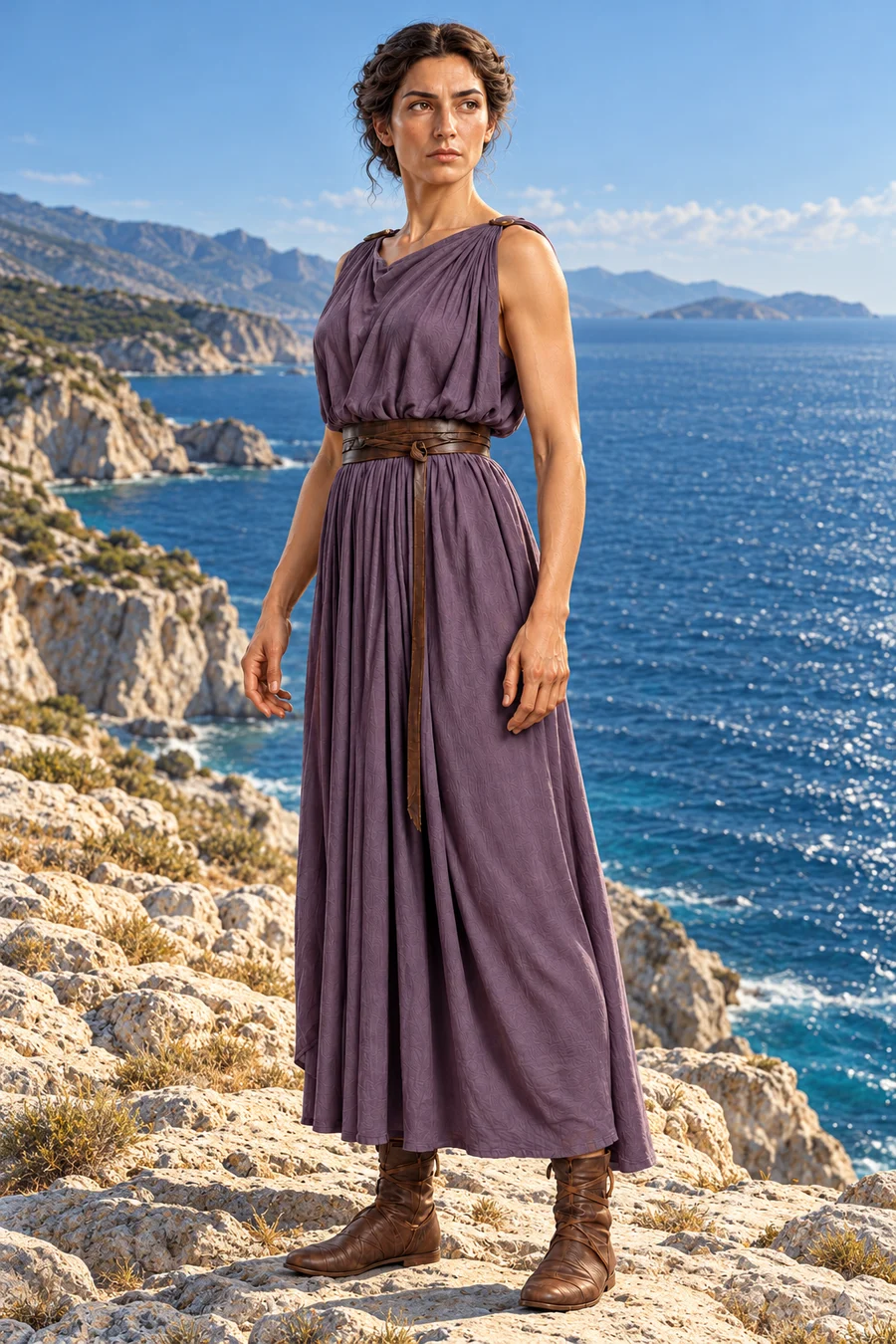
Asteria, of happy name, was a Titaness born to Coeus and Phoebe, and the sister of Leto.1,2 She was the wife of Perses and the mother of Hecate.3,1 Dressed in a girdle and swift hunting-boots which she never unloosed, Asteria was known as a lover of song.4,5
As an island that floated freely on the open sea, Asteria greeted Leto by name while the latter passed by.6,7 Having moved from Euboea to the Cyclades, she welcomed her sister despite Hera’s threats.5 Hera was not angry at Asteria for her actions, and the goddess respected her for choosing the sea over Zeus.4
To avoid Zeus’s romantic pursuit, Asteria transformed into a quail.8 After this flight, she was renamed Delos, and a city originally named Asteria in her honor was later given the same new name.8,6
The island was characterized by constant ringing sounds when Hesperus looked upon it, surrounded by other isles arranged like a choir.9 Maidsen on the island beat their feet on the ground while singing, reflecting her nature as a lover of song.9,5 In one account, she is described as the evil scum of the sea.7
Asteria sat by the edge of the great throne with her head bent a little aslant when sleeping, never forgetting her seat even when sleep laid upon her his forgetful wing.4 From this union, she conceived and gave birth to Hecate.1 Leto did not associate with Asteria before her transformation into Delos.6
The codex facts behind this entry
Asteria is described as having a happy name. The Theogony ll. 404-452 (2) Asteria was an island that floated freely on the open sea. Callimachus, Hymn 4 ¶1
In the myths
Asteria transformed into a quail to avoid Zeus's romantic pursuit. Apollodorus 1.4.1 She conceived and gave birth to Hecate. The Theogony ll. 404-452 (2) Asteria greeted Leto by name while she was passing by. Callimachus, Hymn 4 ¶8 Asteria moved from Euboea to the Cyclades to visit Leto. Callimachus, Hymn 4 ¶7 Asteria welcomed Leto despite Hera's threats. Callimachus, Hymn 4 ¶7 Asteria helped Leto, an action that angered Hera. Callimachus, Hymn 4 ¶9 Asteria chose the sea over Zeus, which Hera respected. Callimachus, Hymn 4 ¶9 Maidsen on the island beat their feet on the ground while singing. Callimachus, Hymn 4 ¶12
Fate
Asteria threw herself into the sea while in the form of a quail. Apollodorus 1.4.1 Hera was not angry at Asteria for her actions. Callimachus, Hymn 4 ¶9 The island leaped from heaven into the sea to escape marriage with Zeus. Callimachus, Hymn 4 ¶1 Asteria was later renamed Delos after her flight from Zeus. Callimachus, Hymn 4 ¶1